

Spotify Adopts Apple’s HLS Video Technology: A Game-Changer for Podcast Creators and Cross-Platform Distribution
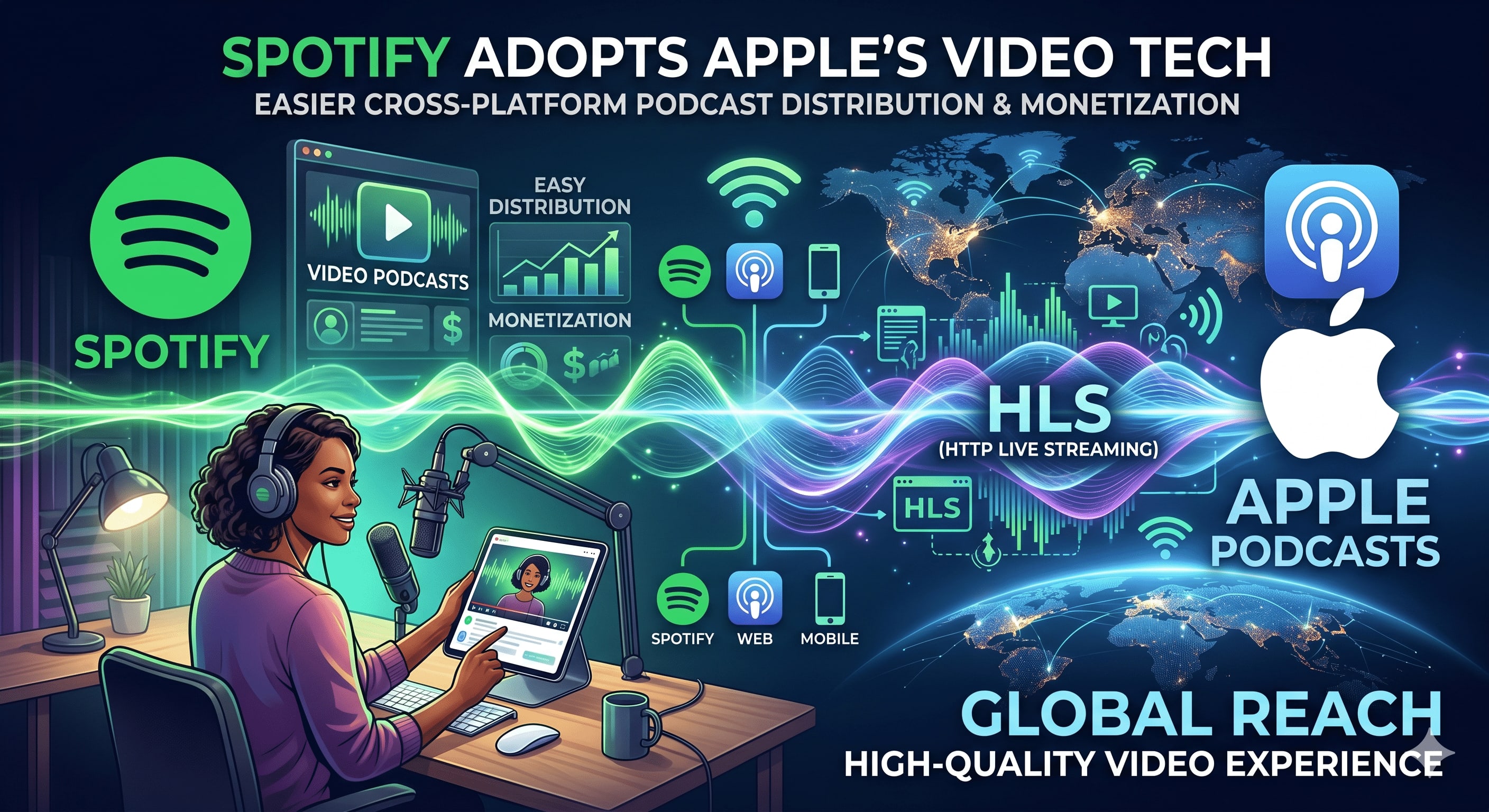
The landscape of digital broadcasting is undergoing a seismic shift. For years, the podcasting industry was defined by a strict adherence to audio-only formats, but the visual medium has rapidly become a non-negotiable asset for creators looking to maximize their reach. In a landmark move announced this Thursday, Spotify revealed its strategic decision to embrace Apple’s HTTP Live Streaming (HLS) video technology. Originally introduced to enhance the Apple Podcasts ecosystem, this cross-platform adoption signifies a pivotal moment in the streaming wars.
Rather than building competing walled gardens, Spotify’s integration of Apple's proprietary video delivery system signals a new era of interoperability. For digital content creators, industry analysts, and global audiences alike, this development introduces unprecedented opportunities for seamless distribution, optimized viewer experiences, and diversified monetization strategies.
The Technical Backbone: Understanding HLS and Global (GEO) Impact
To fully grasp the magnitude of this announcement, one must first understand the technology driving it. HTTP Live Streaming (HLS) is an adaptive bitrate streaming communications protocol developed by Apple. In practical terms, HLS technology automatically and dynamically adjusts video quality in real-time based on the end-user's network speed and device capabilities.
From a Geographic (GEO) and Global SEO perspective, this is a massive leap forward. Podcast audiences are no longer confined to high-speed broadband connections in major metropolitan areas. A listener might start a video podcast on a robust home Wi-Fi network in London, transition to a fluctuating 5G cellular network while commuting, and continue listening in an area with limited 4G coverage.
Key benefits of HLS for the global user experience include:
- Adaptive Resolution: Seamless switching between high-definition (HD) and lower resolutions to match available bandwidth without pausing the stream.
- Reduced Latency: Minimal buffering and fewer sudden drops in video quality, ensuring the content plays smoothly.
- Universal Accessibility: Audiences in emerging digital markets with developing internet infrastructures can now consume video podcasts without prohibitive load times.
Spotify plans to roll out these comprehensive HLS upgrades later this year, ensuring that no matter where a listener is located globally, the video experience remains consistently high-quality.
Breaking Down Walled Gardens: Frictionless Cross-Platform Distribution
Historically, podcast creators faced significant friction when attempting to distribute video content across multiple platforms. Different hosting requirements, varying file specifications, and isolated ecosystems meant that maximizing reach required redundant, time-consuming uploads.
The adoption of HLS effectively dismantles these barriers. The most immediate and profound impact of this update is that Spotify-hosted shows will soon be fully equipped to distribute their video podcasts directly to Apple Podcasts. This expands creator reach exponentially without requiring a single alteration to their existing backend setups or production workflows.
Furthermore, Spotify is extending an olive branch to the broader podcasting infrastructure. The company confirmed that creators utilizing prominent third-party hosting providers can now seamlessly publish video podcasts directly onto the Spotify platform. Supported hosts currently include:
- Libsyn
- Podigee
- Audioboom
- Audiomeans
- Podspace
This feature is already live, following an initial rollout phase earlier this year, and it centralizes the distribution process. By allowing creators to manage their content from their preferred hosting dashboards while still reaching Spotify’s massive global user base, the platform is positioning itself as the ultimate creator-friendly hub.
Expanding the Creator Economy: New Frontiers in Monetization
Reach and distribution are only half the equation; the other half is revenue. In tandem with the HLS technology adoption, Spotify is radically expanding the ways in which podcast creators can monetize their visual content.
By distributing Spotify-hosted video podcasts to Apple via HLS, creators can now tap into the monetization ecosystems of both platforms simultaneously. On the Spotify side, the company is doubling down on the Spotify Partner Program. Creators publishing through the aforementioned third-party hosts (like Libsyn and Podigee) are now fully eligible to earn revenue through this program.
Additionally, Spotify’s leadership announced upcoming expansions to creator revenue models, which will include:
- Direct Sales Integrations: Allowing creators to facilitate their own ad sales and seamlessly integrate them into the video stream.
- Advanced Partner Integrations: Streamlining the connection between creators and global brands for native sponsorships and mid-roll video placements.
This multi-tiered approach to monetization ensures that whether a creator relies on automated platform payouts or highly lucrative direct brand partnerships, the infrastructure is there to support their business growth.
By the Numbers: Spotify’s Trajectory in the Video Landscape
To appreciate why Spotify is making this strategic play, we must look at the data. Since its initial, tentative launch of video podcasts in 2020, Spotify has aggressively doubled down on the visual medium. Realizing that the modern consumer increasingly prefers "vodcasts" (video podcasts) on platforms like YouTube, Spotify evolved its app interface to prioritize visual engagement.
Earlier this year, the platform acted as a catalyst for this growth by significantly lowering the entry requirements for video monetization, effectively democratizing access for mid-level and independent creators.
The results have been staggering. As of November 2025, the platform’s internal metrics reveal:
- Nearly 500,000 active shows have published video content.
- Over 390 million unique users have streamed a video podcast natively on the Spotify app.
These figures illustrate a clear consumer mandate: visual content is driving the next wave of podcasting growth. By improving the foundational delivery technology through HLS, Spotify is not just maintaining its user base; it is actively working to engage viewers who historically turned to dedicated video platforms for this type of content.
The Future of the Audio-Visual Ecosystem
Spotify’s decision to embrace Apple’s HLS technology is a masterclass in strategic product development. By prioritizing the creator experience and the end-user's viewing quality over proprietary platform exclusivity, Spotify is solidifying its position at the absolute center of the evolving podcast landscape.
For creators, the directive is clear: the friction of cross-platform video distribution is rapidly dissolving. As video continues to outpace traditional audio-only formats in engagement metrics and ad revenue, leveraging these new integrated tools will be essential for anyone looking to scale their digital presence. The convergence of Spotify’s immense audience reach, Apple’s robust streaming technology, and frictionless third-party hosting integration marks the dawn of a highly lucrative, borderless era for the creator economy.



Comments
No comments yet. Be the first to share your thoughts!
Leave a Comment