


Introduction: AI Is No Longer Just a Tool — It's a Partner
After several years of experimentation, 2026 is shaping up to be the year AI evolves from instrument to partner, transforming how we work, create, and solve problems.1 Whether you're a business leader, a developer, or simply a curious reader, staying informed about the AI landscape has never been more important.
AI continues to redefine the boundaries of human potential, and the trends for April 2026 highlight a shift in priorities that reflects both the challenges and opportunities in this ever-growing field.2
In this article, we break down the 6 most impactful AI trends shaping the industry right now — and what they mean for you.
1. Agentic AI: From Assistants to Autonomous Systems
One of the biggest stories in tech right now is the explosion of agentic AI — AI systems that don't just respond to prompts but take initiative.
The latest AI trend involves agentic AI, which focuses on creating autonomous systems capable of executing complex tasks independently.2
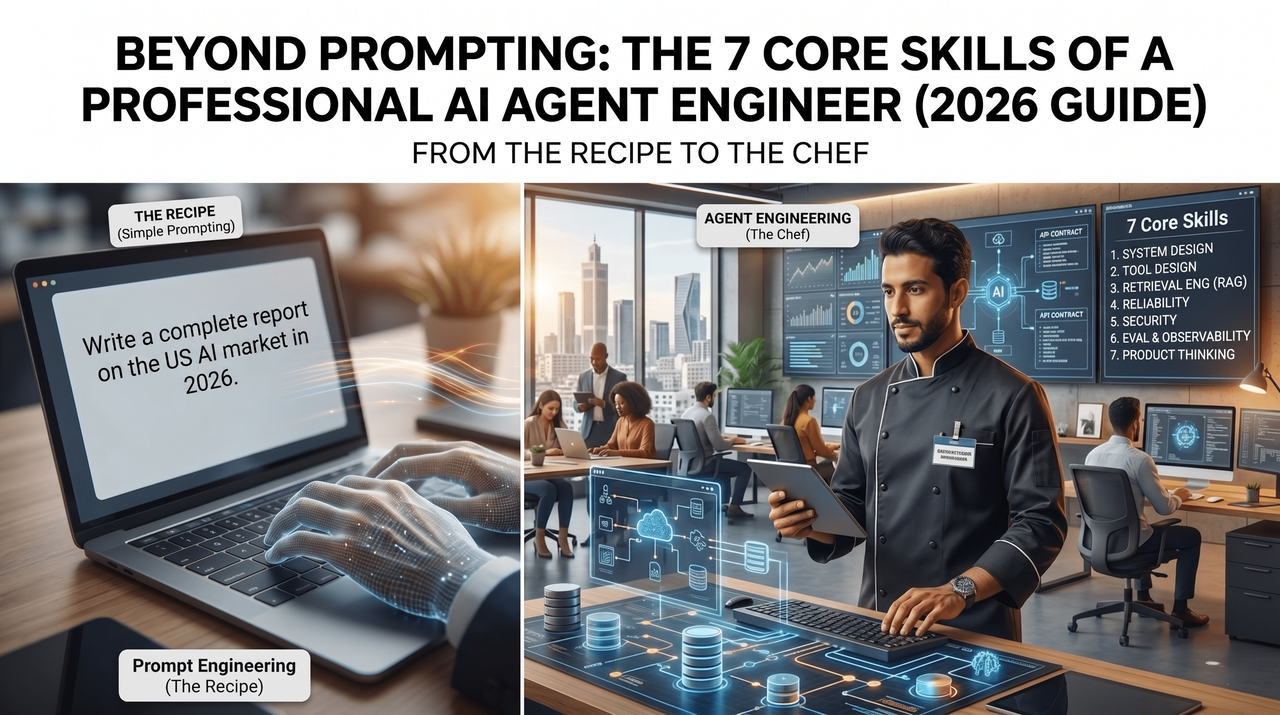
The era of simple prompts is over. We're witnessing the agent leap — where AI orchestrates complex, end-to-end workflows semi-autonomously.3
According to IBM's expert analysis, 2026 will be defined by three trends that move AI beyond personal productivity. "First, AI is shifting from individual usage to team and workflow orchestration," meaning coordinating entire workflows, connecting data across departments, and moving projects from idea to completion.4
However, agentic AI is not without its challenges. Various experiments by vendor and university researchers — including Anthropic and Carnegie Mellon — have found that AI agents make too many mistakes for businesses to rely on them for any process involving big money. There are also cybersecurity issues such as prompt injection and their tendency to become misaligned with human values.5
💡 Key Takeaway: AI agents are powerful but still maturing. Businesses should pilot carefully before full-scale deployment.
2. Open-Source AI: Leveling the Playing Field
The open-source AI revolution is accelerating fast, and it's reshaping who gets to play in the AI space.
In January 2025, DeepSeek released R1, its open-source reasoning model, and shocked the world with what a relatively small firm in China could do with limited resources. By the end of the year, "DeepSeek moment" had become a phrase frequently tossed around by AI entrepreneurs — an aspirational benchmark of sorts. It was the first time many people realized they could get a taste of top-tier AI performance without going through OpenAI, Anthropic, or Google.6
Now in 2026, open-source AI advances in April 2026 highlight China's rise in modular AI systems and Nvidia's push for accessible models, reshaping opportunities for startups and small businesses.7
Nvidia backs open-source initiatives like Reflection AI, lowering cost barriers for small players.7
💡 Key Takeaway: Open-source models are no longer a "budget alternative." For many use cases, they rival proprietary systems.
3. AI and Cybersecurity: A Double-Edged Sword
AI is becoming both a weapon and a shield in the world of cybersecurity.
Advanced AI is accelerating cyberattacks, slashing response times for defenders.8 At the same time, AI agents will proliferate in 2026 and play a bigger role in daily work, acting more like teammates than tools. As organizations rely on these agents to help with tasks and decision-making, building trust in them will be essential — starting with security.1
"Every agent should have similar security protections as humans," says Microsoft's Vasu Jakkal, "to ensure agents don't turn into 'double agents' carrying unchecked risk."1
A notable recent incident underscores these concerns: Anthropic is scrambling to address a significant security breach involving leaked source code for their Claude AI agent. The incident represents one of the most serious AI model security compromises to date, potentially exposing proprietary algorithms and training methodologies.9
💡 Key Takeaway: AI-powered cybersecurity isn't optional anymore. Organizations must adopt AI-first defense strategies.
4. Multimodal AI & Physical AI: Bridging the Digital and Physical World
AI is no longer just about text — it's becoming fully sensory.
Multimodal AI is a trend that's expected to grow significantly in 2026. "These models will be able to perceive and act in a world much more like a human. They'll be able to bridge language, vision, and action, all together."4
On the physical side, by integrating artificial intelligence with robotics, autonomous systems, IoT devices, and smart infrastructure, Physical AI bridges the gap between the digital domain and the physical world. These systems can sense, provide visuals, decide, and act in all types of physical environments — from warehouse robots and surgical assistants to delivery drones and smart traffic systems.10
As per the Deloitte survey, 44% of AI leaders foresee extensive Physical AI adoption within two years, while 36% of respondents expect significant impact.10
💡 Key Takeaway: Multimodal and Physical AI are fast becoming the new frontier — especially in healthcare, logistics, and manufacturing.
5. AI Regulation: The Global Reckoning
Governments worldwide are scrambling to keep up with AI's rapid pace, and April 2026 is seeing major regulatory activity.
As April unfolds, expect sharper differentiation between AI products that have found genuine workflow fit and those still searching for their use case. Regulatory frameworks in the EU and beyond will move from draft to enforcement posture.9
In the United States, following the passage of chatbot safety bills in Oregon and Washington, more chatbot safety bills have been moving in both red and blue states.11 For example, Tennessee Governor Bill Lee signed SB 1580, which will prohibit the deployment of any AI system that represents itself as a qualified mental health professional. This popular bill was approved by the Senate 32–0 and by the House 94–0.11
On the public opinion front, a recent Quinnipiac poll has shed light on public sentiment regarding AI technologies. The survey indicates that more than half of U.S. adults believe AI is likely to cause harm, reflecting growing apprehensions about job displacement and privacy violations.12
💡 Key Takeaway: AI compliance is quickly becoming a business necessity. Companies that invest in ethical AI practices now will gain a long-term competitive edge.
6. AI Investment: The Money Keeps Flowing
Despite regulatory pressures, investment in AI remains red-hot.
Sectors like cloud computing, cybersecurity, and robotics are top areas for funding, with diversified ETFs making AI investments accessible to more people.2
A report released by Morgan Stanley emphasizes that AI is set to leap forward in capabilities and applications in 2026. Notably, institutions are keenly investing in AI startups that focus on machine learning and natural language processing, anticipating that these technologies will play crucial roles in driving efficiency and profitability.12
According to research completed by Exploding Topics, 77% of companies are either using or exploring the use of AI in their businesses.13
💡 Key Takeaway: The AI investment landscape is expanding beyond Big Tech. Entrepreneurs and startups have a real window of opportunity.
What to Watch Next
The first quarter of 2026 has made one thing clear: AI is no longer a future consideration — it is the defining force shaping IT strategy today. From secure offline AI platforms to workforce transformation and new developer frameworks, the landscape is evolving rapidly.14
In 2026, AI will be defined by intelligence, autonomy, and seamless integration across industries, with trends like agentic AI, synthetic content, AGI, and invisible AI reshaping work, creativity, and daily life.10
Final Thoughts
The AI revolution isn't slowing down — if anything, it's hitting a new gear. From autonomous agents and open-source models to global regulation and billion-dollar investments, the decisions made in 2026 will shape the AI landscape for years to come.
Whether you're a developer, entrepreneur, or business executive, the time to engage with AI — strategically and responsibly — is now.

Comments
No comments yet. Be the first to share your thoughts!
Leave a Comment