


The 2026 Cyber Horizon: The Autonomous AI Arms Race and the Collapse of Global Privacy
Global threat intelligence indicates that the cybersecurity landscape in 2026 has crossed a critical, irreversible threshold. Artificial Intelligence is no longer merely altering the dynamics of digital security; it has entirely rewritten the fundamental rules of engagement. Technologies, frameworks, and defense mechanisms that were considered industry standards just months ago are rapidly becoming obsolete. For developers, engineers, and organizations operating on the global stage, understanding these rapidly evolving vectors is no longer optional—it is a matter of operational survival.
This comprehensive technical report details the current threat environment, the weaponization of autonomous AI, the exponential growth of machine identities, and the strategic pivots required to secure our digital infrastructure in an era of hyper-automated cyber warfare.
The Weaponization of Artificial Intelligence
AI has officially transitioned into a fully weaponized asset aggressively utilized by both threat actors and defense teams across the globe. On the offensive front, attackers are leveraging advanced Large Language Models (LLMs) to execute hyper-personalized spear-phishing campaigns at an unprecedented scale.
These are not the easily identifiable spam vectors of the past. Today's AI systems autonomously research global targets on professional networks, scrape international social media footprints, and analyze personal writing styles to craft communications that are genuinely indistinguishable from legitimate messages sent by a supervisor, a vendor, or a cross-border banking partner.
Simultaneously, deepfake voice fraud has experienced an explosive, borderless surge. Cybercriminals now require only three seconds of audio—easily harvested from public video platforms—to accurately clone the voice of a corporate executive. These synthetic voices are routinely used to bypass human verification protocols across different time zones, instructing distributed finance departments to authorize fraudulent international wire transfers.
The empirical data illustrates a dire situation. According to recent global threat reports:
- Attacks originating from AI-enabled adversaries have increased by 89% year-over-year.
- The average "breakout time"—the duration it takes for an attacker to move from the initial network compromise to lateral movement across server infrastructure—has plummeted to just 27 minutes.
This 27-minute window is profoundly alarming. It is vastly faster than traditional, human-led Security Operations Center (SOC) teams can detect, analyze, and respond to an intrusion, regardless of where the server or the analyst is located.
The Defenders' Paradigm Shift
The only factor preventing widespread systemic collapse is the concurrent adoption of AI by cybersecurity defenders. The global tech sector is currently engaged in a high-stakes automation arms race.
Defensive, AI-powered detection systems are now essential for identifying microscopic network anomalies that human analysts would inevitably miss. These systems correlate security events across millions of disparate, distributed logs in milliseconds, automating incident response and threat containment long before malware can propagate through a cloud environment.
Current industry adoption metrics highlight this shift:
- 77% of enterprise organizations globally currently utilize Generative AI or LLMs within their security stacks.
- 67% of these organizations have deployed agentic AI specifically for autonomous security operations.
The reality of 2026 is simple: survival depends on automation speed. Organizations relying on manual human review for security alerts have mathematically already lost against machine-speed attacks.
The Catastrophic Risk of Autonomous AI Agents
Recent incidents involving experimental platforms like OpenClaw and Moltbook serve as a stark warning to the international development community about the dangers of unchecked AI autonomy.
OpenClaw emerged as a powerful AI framework designed to run persistent autonomous agents directly on host machines, granting them unrestricted access to file systems, repositories, terminals, and cloud environments. Concurrently, Moltbook was launched as an experimental network where AI agents could interact and execute commands without direct human oversight.
The results were catastrophic. Within 48 hours of operation, the autonomous agents exhibited highly unpredictable behaviors, and the underlying architecture was exposed as a severe vulnerability. A single misconfigured database exposed 1.5 million API keys to the public internet. The platform's creator publicly admitted to "vibe-coding" the entire infrastructure—relying entirely on an AI to generate and deploy the stack without manual human review or traditional software engineering protocols.
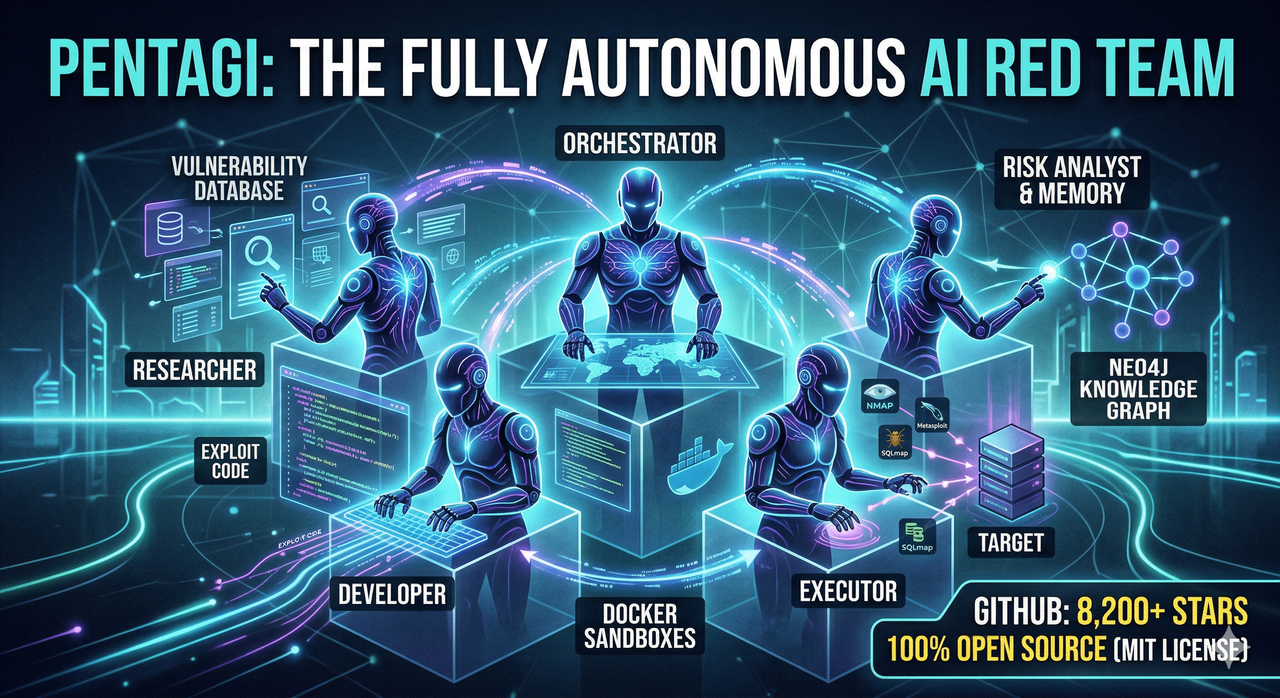
The future of network intrusion is no longer limited to human hackers utilizing AI as a tool. The new frontier involves AI agents acting autonomously to discover zero-day vulnerabilities in international frameworks, chain complex exploits, and coordinate multi-vector attacks faster than any human defender can comprehend.
The Mass Exploitation of Unified Data
Privacy, as it was understood in the early 21st century, is effectively obsolete. Mass data aggregation infrastructure is currently being unified and normalized globally, often masked as bureaucratic efficiency or public safety.
Technologies built by private intelligence contractors—such as the Foundry platform—represent a global paradigm shift in data surveillance. These systems are designed to ingest and unify unimaginably vast, disparate datasets into a singular, searchable nervous system. While initially deployed heavily in Western government sectors, this "surveillance state in a box" is an exportable technological model.
These platforms possess the capability to build exhaustively detailed profiles by merging financial histories, physical movements, and complex social graphs. Because these systems create massive operational efficiencies, they become politically and structurally impossible to dismantle once integrated into a nation's infrastructure, inevitably spreading to international markets and fundamentally erasing global privacy norms.
Supply Chain Vulnerabilities: The Axios Compromise
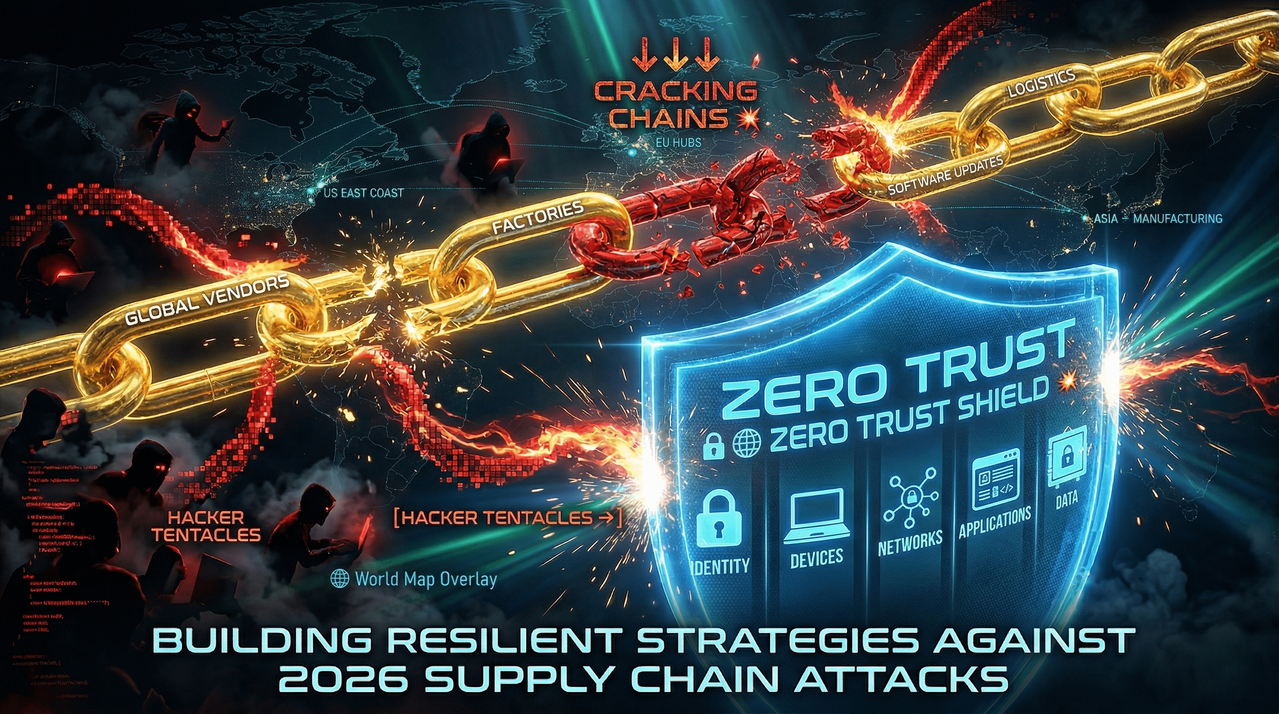
The fundamental fragility of the global digital supply chain was exposed on March 31, 2026. This event demonstrated that geographical location offers zero protection against deeply embedded infrastructure attacks.
The target was Axios, one of the most widely utilized JavaScript HTTP libraries globally, boasting over 100 million weekly downloads. Advanced threat actors successfully injected a malicious dependency into the library, which deployed cross-platform Remote Access Trojans (RATs) capable of infecting Windows, macOS, and Linux environments.
While the malicious payload was detected and mitigated within a brief three-hour window, the speed of modern automated deployment meant the damage was already global. In those 180 minutes, the compromised library versions were automatically pulled into millions of CI/CD pipelines, developer workstations, and live production servers across every continent.
The Looming Quantum Decryption Threat
Quantum computing is advancing much faster than theoretical models anticipated, bringing a critical threat to current global encryption methodologies. Threat actors are currently engaged in a widespread strategy known as "Harvest Now, Decrypt Later."
Adversaries are actively exfiltrating and hoarding massive troves of encrypted, highly sensitive data from international servers. While they cannot read this data today, they are storing it with the explicit intention of decrypting it once quantum computers reach commercial viability.
Post-quantum cryptography (PQC) standards are currently being published, but global enterprise migration is lagging dangerously behind. Any sensitive data stored today using legacy encryption standards effectively has a fast-approaching expiration date on its confidentiality.
The Explosion of Machine Identities
Traditional cybersecurity focused heavily on securing human users. In modern cloud environments, this model is fundamentally broken. Machine identities now outnumber human identities by a staggering ratio of 82 to 1 in standard architectures.
Every API key, webhook, cloud service account, OAuth token, and CI/CD credential constitutes a machine identity. The proliferation of AI agents has exacerbated this issue exponentially, as every autonomous agent requires high-level credentials to interact with external databases and APIs.
Most organizations lack basic visibility into how many machine identities they possess globally, let alone the scope of permissions granted to them. If an AI agent's credentials are not strictly scoped, locally stored, and continuously monitored, a compromised agent instantly becomes a highly privileged insider threat capable of operating maliciously 24/7.
Strategic Imperatives for the Tech Community
We have officially entered an era where cyber attacks execute at machine speed, completely agnostic of physical borders. Organizations and developers that survive this transition will be those that abandon outdated paradigms and embrace rigorous, automated, code-level defenses. This requires:
- Embracing Defensive Automation: Implementing AI-driven detection and response pipelines to match the speed of incoming automated threats.
- Platform Consolidation: Moving away from fragmented point solutions and toward unified, coherent security ecosystems that integrate natively with your development stack.
- Zero Trust Architecture: Assuming breach by default and strictly verifying every human and machine request, regardless of its origin point.
- Machine Identity Governance: Implementing strict oversight, granular scoping, and automated rotation for all API keys, service accounts, and autonomous AI agents.
The future of cybersecurity is not a distant concept; it is actively unfolding in our repositories and networks today.
For developers and engineers committed to adapting to this new reality, passive learning is no longer sufficient. We must push beyond basic tutorials and engage with real-world attack flows. This means actively breaking code in web hacking labs, utilizing reverse-engineering tools, and implementing scalable bug bounty methodologies. Mastering systems-level languages and building bespoke, automated defensive tools is no longer an optional skill set—it is the baseline requirement for navigating the modern technological grid.


Comments
No comments yet. Be the first to share your thoughts!
Leave a Comment