
![AEO (Answer Engine Optimization): The New SEO for ChatGPT & Perplexity [2026 Guide]](https://i.postimg.cc/XqNnFw9D/compress-O-Gemini-Generated-Image-nsszbnnsszbnnssz.png)
AEO (Answer Engine Optimization): The New SEO for ChatGPT & Perplexity
TL;DR — What You Need to Know
Answer Engine Optimization (AEO) is the practice of structuring and enhancing your content so that AI-powered search platforms select it as a cited source when generating answers. Your content no longer just needs to rank — it needs to get cited.
In 2026, the rules of digital visibility have been rewritten. The digital landscape has shifted from a world of blue links to a world of definitive answers. 69% of searches now result in zero clicks, as users get everything they need from LLM-powered responses. If your brand isn't being cited by ChatGPT, Perplexity, or OpenAI's Operator, you simply don't exist to a growing segment of the market.
This guide covers what AEO is, why it matters, how it differs from SEO, which platforms to optimize for, and the exact strategies to get your brand cited by AI engines in 2026.
What Is Answer Engine Optimization (AEO)?
Answer Engine Optimization (AEO) is a search visibility discipline focused on optimizing content to appear as the cited or recommended answer in AI-powered search platforms. Unlike traditional SEO, which targets keyword rankings on search results pages, AEO targets the answer layer — ensuring a brand is the source AI models select when generating responses to user queries.
Think of it this way: SEO is about winning a race. AEO and GEO are about being trusted enough to sit on the panel of experts the AI consults before it speaks — whether that AI is summarizing a search result or generating a full conversational answer.
AEO vs. Traditional SEO: Key Differences
| Dimension Traditional SEO AEO | ||
| Goal | Rank on SERPs, earn clicks | Be cited in AI-generated answers |
| Success Metric | Rankings, CTR, organic sessions | Citations, brand mentions, AI visibility |
| Content Focus | Keywords, backlinks, page authority | Answer clarity, entity signals, factual accuracy |
| User Interaction | Click → Visit → Convert | Answer delivered → Brand trust built |
| Optimization Level | Page level (titles, keywords, backlinks) | Fact level (definitions, statistics, structured sections) |
SEO optimizes content to rank on search engine results pages and drive clicks. AEO optimizes content to be cited in AI-generated answers. SEO works at the page level (titles, keywords, backlinks), while AEO works at the fact level (clear definitions, citable statistics, structured sections).
AEO vs. GEO: What's the Difference?
The terminology can be confusing. Agencies, publishers, and SEO specialists have adopted multiple acronyms, including GEO, AEO, GSO, LLMO, and AIO, to describe overlapping tactics.
AEO is a component of the broader discipline known as Generative Engine Optimization (GEO). While GEO encompasses all strategies for optimizing content across generative AI platforms, AEO focuses specifically on the answer-retrieval layer: ensuring your content is the one that gets selected when an AI engine needs a source for a specific fact, definition, or recommendation.
In practice, the two terms are used interchangeably across the industry. The signals that improve your AEO performance improve your GEO performance, and vice versa.
Why AEO Matters in 2026: The Data Is Undeniable
The shift to AI-powered search is no longer speculative. Here are the numbers that prove AEO is now a business necessity:
AI Search Adoption Is Massive
- ChatGPT now reaches 883 million monthly users, and Google AI Overviews appear in nearly 55% of all Google searches.
- By January 2026, ChatGPT leads the AI search market share with 60.7%, followed by Google Gemini at 15.0% and Microsoft Copilot at 13.2%.
- Nearly a third (31.3%) of the US population will use generative AI search in 2026, according to an EMARKETER forecast.
Zero-Click Searches Dominate
- 58.5% of Google searches in the U.S. end without a click, sitting at a slightly higher 59.7% in Europe.
- Zero-click searches vary across Google: 34% in Google Search without an AI Overview, 43% in Google Search with an AI Overview, and 93% in Google's AI Mode.
- AI Overviews now reduce clicks by 58%.
Traditional Search Traffic Is Declining
- Gartner predicts that by 2026, 25% of organic search traffic will shift to AI chatbots and virtual assistants instead of traditional search clicks.
- AI-referred sessions jumped 527% year-over-year in the first five months of 2025.
The Business Impact Is Clear
- According to the 2026 HubSpot State of Marketing report, 58% of marketers say visitors referred by AI tools convert at higher rates than traditional organic traffic.
- AI search visitors who do click convert at 23x the rate of traditional search visitors, fundamentally shifting SEO from a volume game to a quality game.
- The GEO market is valued at $848 million in 2025, projected to reach $33.7 billion by 2034 at a 50.5% CAGR, while 54% of US marketers plan to implement GEO within 3-6 months.
How Answer Engines Work: The RAG Pipeline
To optimize for AI citations, you need to understand how answer engines find and select content.
Answer engines use a process called Retrieval-Augmented Generation (RAG) to find, evaluate, and synthesize content from across the web. Understanding this pipeline is essential for AEO because each stage presents optimization opportunities.
The 4-Stage Answer Engine Pipeline
| Stage What Happens AEO Optimization Opportunity | ||
| 1. Query Interpretation | AI parses intent, entities, and relationships | Align content with natural-language questions |
| 2. Retrieval | System searches index for semantically relevant content | Ensure strong SEO foundation + crawlability |
| 3. Ranking & Selection | Documents scored on relevance, authority, recency, structure | Build authority, keep content fresh, use structured data |
| 4. Synthesis & Citation | AI assembles answer from multiple sources and cites them | Make every fact independently citable |
Retrieved documents are scored on relevance, authority, recency, and structural quality.
Generative AI systems synthesize responses from multiple candidate sources, which means the goal is not to rank first but to be worth quoting.
The 7 Major Answer Engines You Must Optimize For
Answer engines now process billions of queries monthly across ChatGPT, Google Gemini, Perplexity, Microsoft Copilot, and Grok — yet the vast majority of brands have no documented strategy for appearing in AI-generated answers.
Each platform has distinct citation behaviors:
1. ChatGPT
- Over 400 million weekly active users and roughly 70% of the AI search market.
- ChatGPT favors depth and comprehensiveness.
- Wikipedia serves as ChatGPT's most cited source at 7.8% of total citations.
- ChatGPT is more likely to cite content that uses definite language, contains a question mark, has a high entity density, has a balanced mix of facts and opinions, and uses simple writing structures.
2. Google AI Overviews & AI Mode
- Google's AI Overviews now appear in 18% of all Google searches and in 57% of long-tail queries.
- AI Overviews responds strongly to schema markup and structured content hierarchy.
- 76% of cited sources in Google AI Overviews are directly pulled from the top 10 organic search results.
3. Perplexity
- Unlike ChatGPT which generates answers from training data, Perplexity searches the web in real-time and shows exactly which sources it's citing.
- Perplexity heavily weights content recency.
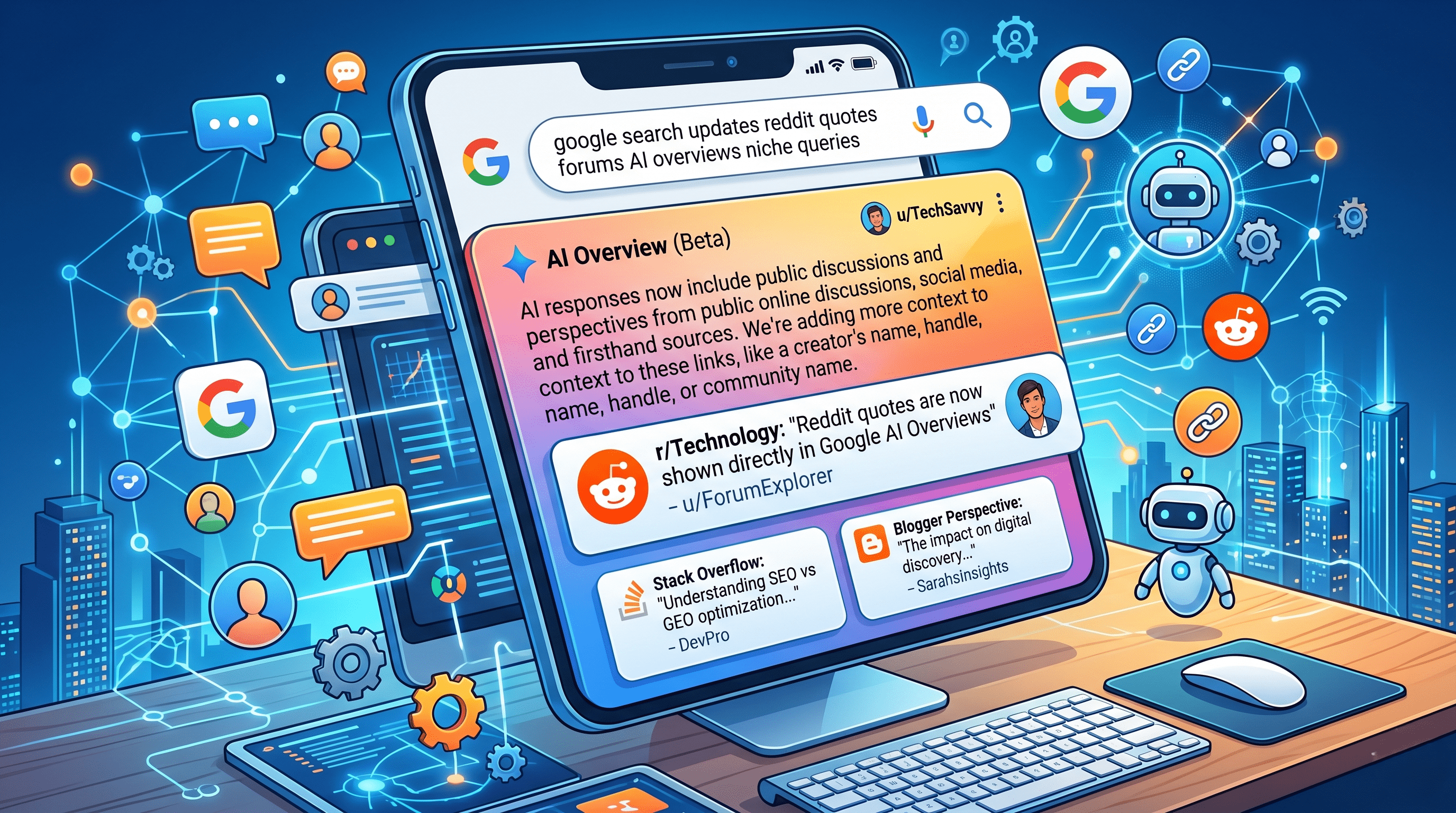
- Reddit emerges as the leading source for Perplexity at 6.6% of citations.
4. Microsoft Copilot
- Powered by OpenAI's GPT models, integrated across Bing and Windows
- DeepSeek and Copilot skew toward LinkedIn Articles.
5. Google Gemini
- Gemini leans on Google's existing authority signals and Knowledge Graph associations.
Platform-Specific Strategy Summary
| Platform Top Citation Signals Key Content Priorities | ||
| ChatGPT | Depth, entity density, definitive language | Comprehensive guides, authoritative data |
| AI Overviews | Schema markup, SERP authority, structured hierarchy | Technical SEO, top-10 rankings |
| Perplexity | Recency, real-time web data, Reddit presence | Fresh content, community engagement |
| Copilot | LinkedIn presence, Microsoft ecosystem | LinkedIn articles, professional content |
| Gemini | Knowledge Graph, Google authority signals | Entity consistency, Google ecosystem |
This is why optimizing for "AI search" as a single monolith misses the point. What earns citations in Perplexity may be invisible in Gemini.
10 Proven AEO Strategies to Get Cited by AI in 2026
AEO is not about following a single trick. It requires a systematic approach across six areas: content structure, answer formatting, citation quality, schema markup, entity recognition, and topical authority.
Strategy 1: Lead with Direct Answers ("Answer-First" Format)
Every section of your content should lead with a direct answer. AI engines extract the first 1-2 sentences of a section to determine if it answers a query. If your opening is vague context-setting, the engine moves on to a competitor.
The "answer capsule" technique has emerged as one of the most effective AI optimization strategies. This approach places a comprehensive, standalone answer immediately after your primary heading — before any introductory context or background information.
❌ Before (Traditional SEO Style):
"In today's evolving digital landscape, many marketers are asking about AI citation strategies..."
✅ After (AEO-Optimized):
"Answer Engine Optimization (AEO) is the practice of structuring content so AI engines like ChatGPT and Perplexity cite it when generating answers. Here's how it works..."
Strategy 2: Use Definition-Lead Sentences
A definition-lead sentence opens a section with a clear definitional structure: [Entity] is a [category] that [differentiator]. This pattern has been used in encyclopedic writing for centuries and remains the format that AI retrieval systems parse most reliably.
When an AI engine encounters a page in its retrieval results, the opening sentence of relevant sections carries disproportionate weight. CMU's GEO research (KDD 2024) confirmed that definition-structured openings correlate with higher impression scores in LLM retrieval pipelines.
Strategy 3: Implement Structured Data (Schema Markup)
The foundation layer ensures that answer engines can parse your content programmatically. Without structured data, engines must rely entirely on natural language understanding to extract answers — which introduces ambiguity and reduces your chances of being cited.
Essential schema types for AEO:
| Schema Type Purpose Best For | ||
| FAQPage | Marks Q&A pairs explicitly | Service pages, resource pages |
| HowTo | Structures step-by-step processes | Tutorials, guides |
| Article | Identifies authorship and publication | Blog posts, thought leadership |
| Organization | Links brand entity to products/services | Homepage, about page |
| Product | Structures product data for AI | E-commerce, SaaS |
FAQPage is a Schema.org structured data type that explicitly marks question-answer pairs on a web page. When deployed correctly, it gives answer engines a machine-readable index of every Q&A on your page, eliminating the need for the engine to infer which text constitutes a question and which constitutes an answer.
Strategy 4: Build Entity-First Content
Entity-first content structuring is the practice of organizing content around clearly defined entities — brands, products, concepts, people — rather than keyword strings. AI models process information through entity recognition, meaning they identify entities by type and category before they analyze any keyword relevance.
AEO emphasizes entity clarity, structured data, factual accuracy, and citation-worthiness over keyword density and backlink volume.
How to build entity authority:
- Clearly name and describe all entities (your brand, products, people)
- Use consistent naming across all platforms and pages
- Create a Wikipedia page if your brand is notable
- Maintain consistent NAP (Name, Address, Phone) across directories
- Link your brand to industry concepts through authoritative content
Strategy 5: Anchor Content with Statistics & Original Data
Content with statistics, citations, and quotations achieves 30-40% higher visibility in AI responses, and pages updated within 2 months earn 28% more citations than older content.
AI engines prioritize factual, verifiable content. Include:
- Original research and proprietary data
- Specific numbers with clear sourcing
- Expert quotes attributed to named individuals
- Comparison tables with concrete data points
Strategy 6: Build Multi-Source Authority (Off-Site AEO)
Data shows that 85% of AI brand mentions originate from third-party sources.3 Your own website is not enough.
Semrush analyzed 100M AI citations and found that Reddit appeared the most, close to 10% on ChatGPT, Google AI Mode, and Perplexity.
Where AI engines pull citations from:
| Platform Share of AI Citations Which AI Engines Cite It Most | ||
| ~10% across major platforms | Perplexity, ChatGPT, AI Overviews | |
| Wikipedia | 7.8% (ChatGPT) | ChatGPT, Gemini |
| YouTube | ~32% of social citations | Google AI Overviews, Gemini |
| Medium | ~5% | ChatGPT, Perplexity |
| Growing share | Copilot, DeepSeek |
Your brand needs to appear across multiple platforms and sources saying the same things. If ChatGPT encounters your brand in one Reddit thread, one LinkedIn article, and one well-structured blog post all reinforcing the same expertise signals, that repetition builds recognizability in the model's understanding of who you are and what you know.
Strategy 7: Maintain Content Freshness
Continuous freshness maintenance is the systematic practice of updating content on a quarterly cadence with visible version signals.
A 2022 guide on a 2026 trend is a liability.
Freshness signals that matter:
- Add "Updated [Month Year]" visibly at the top
- Refresh statistics with current data quarterly
- Add new sections addressing recent developments
- Maintain a content audit calendar
Strategy 8: Optimize for Conversational & Question-Based Queries
70% of users now search queries in natural language instead of fragmented keywords.
This means your headings should mirror exact questions users ask:
- Use H2/H3 headings formatted as questions
- Cover "what," "why," "how," and "compared-to-what" for each topic
- Include FAQ sections with concise, direct answers
- Structure content for voice search compatibility
Strategy 9: Build Topic Clusters, Not Isolated Pages
Both SEO and AEO benefit from topic cluster architecture. The difference is that AEO requires an additional layer of optimization: making every section independently understandable and every key fact independently citable.
Topic cluster structure for AEO:
Strategy 10: Track, Measure, and Iterate
Periodically search on Google, voice assistants, and AI chatbots with questions relevant to your content. Emerging tools like OmniSEO can track your mentions across various AI and answer platforms.
43% of marketers are optimising for AI search in 2026 — but only 14% are measuring it.
AEO Measurement Framework:
| Metric What It Measures Tools | ||
| AI Citation Rate | How often your brand is cited | OmniSEO, Profound, Otterly.ai |
| Share of Voice (AI) | Your brand vs. competitors in AI answers | Superlines, Profound |
| AI-Referred Traffic | Visits from AI platforms | Google Analytics (referral source) |
| Citation Sentiment | Positive/negative brand mentions | Superlines, manual prompting |
| Conversion from AI Traffic | Revenue influenced by AI discovery | CRM attribution, GA4 |
The AEO + SEO Integration Framework
AEO and SEO are not competing strategies — they are complementary layers of a unified search visibility framework.
For most businesses, a 70/30 split works best — 70% traditional SEO, 30% AEO-specific initiatives. This ratio shifts based on industry and target audience behavior.
Where SEO and AEO Converge
The convergence point is content quality and structure. Content that satisfies AEO requirements — clear answers, structured data, entity authority — simultaneously improves traditional SEO because Google's algorithms increasingly reward the same signals that AI models use for citation selection.
The Unified Visibility Framework
SEO drives the organic traffic that pays the bills today. AEO builds the brand authority that protects your visibility as AI search grows. The good news is that most AEO best practices also improve your SEO performance. Well-structured, authoritative, data-backed content ranks better in Google and gets cited more frequently by AI engines.
AEO Case Studies: Real Results in 2026
Across recent AEO case studies, one pattern shows up consistently — visibility shifts before traffic does. Brands see earlier gains in AI citations, brand mentions, and assisted conversions.
Key Findings from AEO Implementations
- From B2B SaaS companies driving thousands of AI-referred trials to agencies generating sales-qualified leads directly from LLMs, these examples highlight the tactics that helped both established brands and emerging players compete for AI visibility.
- Mangools (an SEO tool provider) detailed how answering questions concisely led one blog post to capture a featured snippet, boosting traffic and brand exposure.
- Local service businesses have seen increases in calls from voice searches by optimizing Google Business Profiles and creating voice-friendly FAQ content.
- Properly localized content shows 280% better citation rates than machine-translated content.
- Answer engine optimization typically shows initial results within weeks to months. Businesses with strong domain authority and well-structured content often see citations begin appearing in AI responses within 4-6 weeks of implementing AEO optimizations.
AEO Implementation Roadmap: 90-Day Plan
Phase 1: Audit & Foundation (Days 1–30)
| Action Details | |
| AI Visibility Audit | Query ChatGPT, Perplexity, Gemini, and AI Overviews with your target buyer questions. Document where you appear and where you don't. |
| Competitor Citation Analysis | Identify which brands AI cites for your target queries |
| Content Audit | Review top 20 pages for answer-first formatting, schema, and entity clarity |
| Technical Foundation | Ensure crawlability, fast performance, and mobile optimization |
| Schema Deployment | Add FAQPage, Article, and Organization schema to priority pages |
Phase 2: Content Optimization (Days 31–60)
| Action Details | |
| Restructure Existing Content | Add answer capsules, definition-lead sentences, and question-based headings |
| Create Pillar Content | Build comprehensive guides for your 5 most important topic clusters |
| Data Enrichment | Add statistics, original data, expert quotes, and comparison tables |
| FAQ Optimization | Build robust FAQ sections with direct, concise answers |
| Content Freshness | Update publication dates, refresh stats, add recent developments |
Phase 3: Authority Building & Scaling (Days 61–90)
| Action Details | |
| Multi-Platform Presence | Publish on Reddit, LinkedIn, Medium, YouTube, and industry forums |
| Digital PR & Mentions | Earn brand mentions on authoritative third-party sources |
| Wikipedia & Knowledge Graph | Strengthen entity presence in structured knowledge sources |
| Measurement Setup | Deploy AEO tracking tools and establish baseline metrics |
| Iterate & Scale | Analyze first citation data, double down on what works |
Common AEO Mistakes to Avoid
❌ Mistake 1: Treating AEO as Separate from SEO
The biggest strategic mistake is treating AEO as separate from SEO. Successful integration requires understanding how these approaches complement rather than compete with each other.
❌ Mistake 2: Optimizing Only Your Own Website
If your visibility strategy is built entirely around your own site, you are "optimizing the smallest slice of the pie."
❌ Mistake 3: Chasing Traffic Instead of Visibility
Traditional ROI calculations don't work for answer engine optimization. The value isn't just traffic — it's credibility, brand awareness, and sales cycle compression.
❌ Mistake 4: Ignoring Content Freshness
AI engines heavily weight recency. Outdated content gets filtered out of citation candidates.
❌ Mistake 5: Not Measuring AI Visibility
Only 14% are tracking AI citation visibility, and only 11% monitor branded search or share of voice. You can't improve what you don't measure.
The Future of AEO: What's Coming Next
Agent-to-Agent (A2A) Commerce
The most radical shift in 2026 is the emergence of Agent-to-Agent (A2A) Commerce. Gareth Cummings, CEO of eDesk, predicted that customer AI assistants would increasingly interact directly with brand agents. We are now seeing this in the wild: a customer's personal AI agent negotiates a bulk discount with a brand's Agentforce instance in milliseconds.
Machine-Readable Brands
The 2026 market demands Machine-Readable Brands. This requires a shift in site architecture toward the Model Context Protocol (MCP), which allows agents to securely connect to enterprise data without custom API coding.
Paid AI Visibility
Google is testing sponsored ads within AI Mode (February 2026), signaling that paid AI visibility is imminent. OpenAI's CFO has confirmed that ads are coming to ChatGPT, meaning the window for establishing organic AI visibility is closing.
AI Influence on Commerce
Gartner projects that by Q4 2026, AI-powered answer engines will influence 60% of commercial research queries, up from 40% in early 2025.
AEO Statistics at a Glance (2026)
| Metric Data Point | |
| ChatGPT monthly users | 883 million |
| AI search market share (ChatGPT) | 60.7% |
| Google AI Overviews coverage | 55% of all searches |
| Zero-click rate (AI Mode) | 93% |
| Zero-click rate (AI Overviews) | 43% |
| Zero-click rate (US overall) | 58.5% |
| Click reduction with AI Overviews | 58% |
| AI-referred traffic YoY growth | 527% |
| AI visitor conversion vs. traditional | 23x higher |
| Content with stats: AI visibility boost | 30-40% |
| Fresh content citation premium | +28% |
| AI brand mentions from third-party sources | 85% |
| GEO market value (2025) | $848 million |
| GEO market projected (2034) | $33.7 billion |
| Marketers measuring AI citation visibility | Only 14% |
Conclusion: The Citation Is the New Click
In this new paradigm, the "click" is a secondary conversion; the primary conversion is the citation.
The transition from SEO to Answer Engine Optimization is not a trend; it is a structural revolution. The brands investing in AEO now will earn disproportionate attention, trust, and demand as AI-powered search continues to grow.
AEO is still early. Most brands haven't started optimizing for answer engines, which means the window for first-mover advantage is wide open.
The organizations that win in 2026 will be those that treat AI engines not as a threat to their traffic, but as the most important audience they've ever optimized for. If your content isn't featured as an answer, you might miss out on visibility entirely.
Start today. Audit your AI visibility. Restructure your content. Build multi-platform authority. Measure citations. Iterate relentlessly.
The new SEO isn't about ranking. It's about being the answer.

Comments
No comments yet. Be the first to share your thoughts!
Leave a Comment