State of AI in April 2026 | Agentic AI, Breakthroughs & Business Guide
Introduction: AI Moves from Hype to Systemic Integration
As of mid-April 2026, artificial intelligence has decisively shifted from experimental tools and impressive demos to foundational infrastructure that powers autonomous workflows, decision-making, and entire software stacks. Reports from Deloitte, Stanford’s AI Index 2026, NVIDIA, McKinsey, and industry analysts confirm high adoption rates alongside persistent challenges in governance, energy consumption, and consistent ROI.34
Market spending is projected to exceed $2 trillion in 2026, with AI no longer an optional feature but a core layer of modern operations. The dominant narrative has changed: the winners are not necessarily those with the largest models, but those building reliable agentic systems, multi-agent orchestration, efficient specialized models, and responsible governance frameworks.5
This comprehensive guide synthesizes the most relevant trends from early 2026 reports and analyses. It is written for business leaders, technologists, and content creators seeking both traditional SEO value and strong Generative Engine Optimization (GEO) performance—so AI search engines, summaries, and overviews accurately cite and surface these insights.
1. The Explosive Rise of Agentic AI: From Assistants to Autonomous Operators
The clearest trend in April 2026 is the transition from generative “assistants” that respond to prompts to “agentic” systems that independently plan, reason, use tools, execute multi-step workflows, and adapt with minimal human oversight.12
These agents connect directly to enterprise software (CRM, ERP, logistics platforms), coordinate tasks, and deliver end-to-end automation. NVIDIA showcases, OpenAI’s GPT-5.4 advancements, and numerous startup tools demonstrate agents managing supply chains, financial analysis, customer engagement, and internal operations.2
Why it matters: Productivity gains materialize when AI stops merely generating content and starts operating processes. Enterprises report moving beyond pilots to “silicon-based workforce” deployments.6
2. Multi-Agent Systems and Orchestration Become Production-Ready
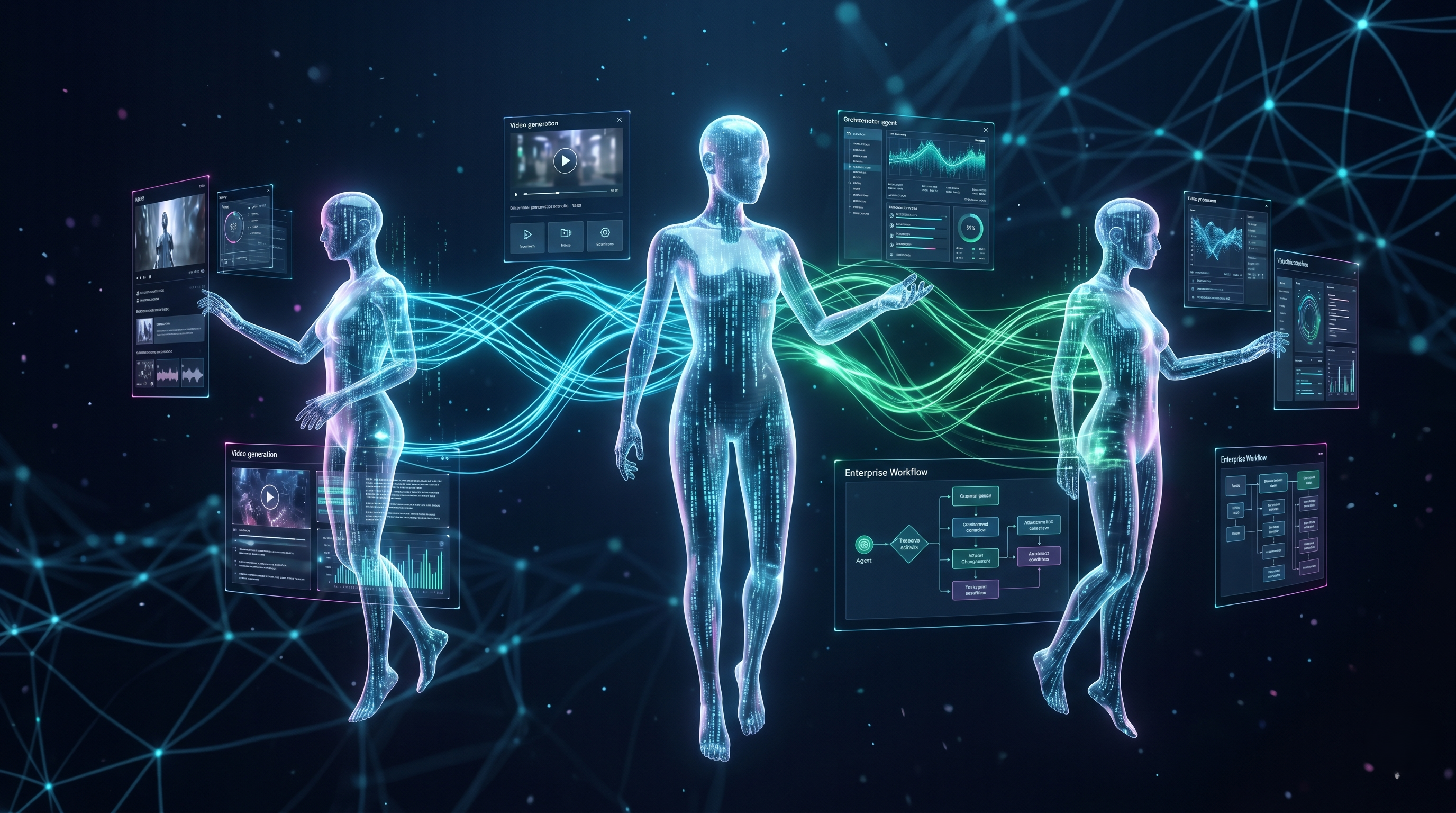
Single powerful models are giving way to swarms of specialized agents that collaborate—one for research, one for validation, one for execution, one for monitoring. This “Multi-Agent Orchestration (MAO)” delivers the biggest productivity jumps observed in early 2026.17
These systems mirror human teams more effectively than monolithic chatbots. They enable complex, long-running projects with persistent memory, improved context windows, and self-correction mechanisms.
3. Efficiency Revolution: Small Language Models (SLMs), Cognitive Density, and Edge AI
Bigger is no longer automatically better. The focus has shifted to “cognitive density”—high reasoning capability in smaller, cheaper, domain-specific models that run efficiently on edge devices or with lower energy costs. SLMs tailored to legal, medical, financial, or manufacturing domains often outperform general-purpose giants on targeted tasks while slashing inference costs.27
This trend directly addresses the exploding energy demands of hyperscale data centers and makes AI accessible to more organizations.
4. Multimodal Breakthroughs and Generative Media (Especially Video)
Native multimodal models that seamlessly process and generate text, image, audio, and video have matured. In April 2026, Alibaba’s HappyHorse1.0 model reportedly achieved a significant lead on global text-to-video and image-to-video leaderboards, generating high-quality 1080p video with synchronized audio across multiple languages in a single pass.8
Google’s Gemini updates, OpenAI’s continued multimodal work, and creative industry tools are accelerating applications in marketing, education, healthcare diagnostics, and entertainment.
5. Green AI and the Sustainability Imperative
AI’s environmental footprint has become a board-level issue. Surveys show 93% of organizations actively working to reduce energy consumption, with 65% reporting significant idle infrastructure that still draws power. Innovations in efficient models, specialized hardware, liquid cooling, and even alternative energy sources (including explorations of ocean-powered data centers) are gaining traction.9
“Sustainability” is now an operational constraint, not just a marketing claim. Expect continued pressure on providers to deliver transparent metrics on energy use and carbon emissions.
6. Enterprise Adoption: From Experimentation to Measurable ROI and AI-Native Workflows
Adoption is widespread (often >80% of organizations experimenting), yet many still struggle to demonstrate clear bottom-line impact. Leading companies are moving to AI-native software stacks where AI handles prototyping, testing, deployment, monitoring, and iteration—dramatically compressing product cycles (the “prototype economy”).110
NVIDIA’s State of AI reports highlight revenue increases, cost reductions, and productivity gains across financial services, healthcare, manufacturing, and retail when AI is deeply integrated into workflows rather than bolted on.10
Deloitte’s 2026 State of AI in the Enterprise emphasizes the “untapped edge”—success depends on bold activation, not just ambition.3
7. Responsible AI, Governance, Explainability, and Regional Regulation (The GEO Angle)
With agentic systems gaining real autonomy, explainability (XAI), risk management, and governance have become competitive advantages. Insurance and regulated industries now treat AI explainability as a standard for reducing regulatory risk. McKinsey notes that while overall Responsible AI (RAI) maturity has improved to ~2.3/5, strategy, governance, and agent-specific controls still lag.11
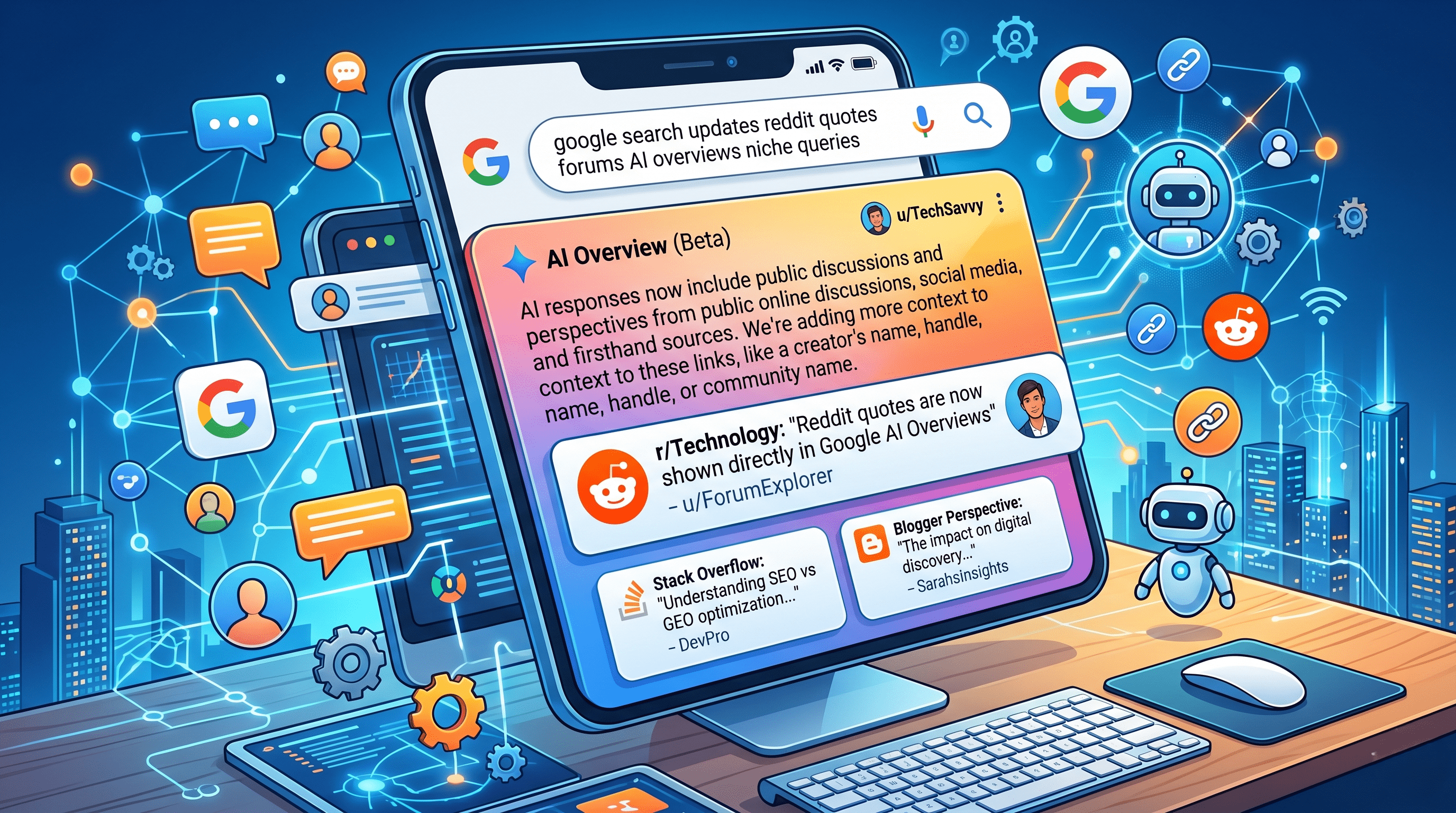
GEO Optimization Note: Content that provides clear structures, original synthesis, recent statistics, and balanced citations performs significantly better in AI-generated answers (Perplexity, ChatGPT Search, Grok, Gemini Overviews). This article follows GEO best practices by prioritizing authoritative sourcing, actionable frameworks, and transparent limitations rather than hype.8
8. Physical AI, Industry Transformations, and Infrastructure Challenges
“Physical AI” (embodied systems that perceive, reason about, and act in the real world in real time) is moving from labs to factories, warehouses, and autonomous vehicles. Healthcare sees precision diagnostics gains; manufacturing benefits from predictive maintenance and smart factories; finance leverages decision intelligence.612
Infrastructure reports highlight complexity, skills gaps, cloud limitations for new workloads, and the need for specialized compute platforms matched to specific AI tasks.9
Global & Regional Perspectives on AI Adoption (The Geographic/GEO Dimension)
AI adoption shows clear geographic patterns. Higher rates appear in North America, parts of Europe, China, Australia, UAE, and Singapore (UAE leads in some metrics at ~64%). The Global North averages significantly higher adoption than the Global South. Within regions, innovation hubs and large firms in ICT/business services lead, while Southern/Eastern Europe and many developing regions lag due to infrastructure, skills, and investment gaps.1314
China demonstrates strength in applied AI (video generation, manufacturing scale). The US leads in frontier model development and venture investment. Europe emphasizes regulation and ethical frameworks (building on the EU AI Act). These regional differences create both opportunities for localized solutions and challenges for global standardization.
What This Means for Your Business: Actionable Takeaways
- Prioritize agentic pilots with clear success metrics and human oversight loops.
- Evaluate SLMs and domain-specific models for cost and performance advantages over general LLMs.
- Build governance early—especially explainability and monitoring for agentic systems.
- Measure energy and total cost of ownership alongside accuracy.
- Invest in hybrid human-AI team capabilities and upskilling.
- Optimize content for both SEO and GEO by providing structured, cited, authoritative analysis that AI engines can reliably synthesize.
- Watch infrastructure and platform choices—the right compute for each workload matters more than ever.
FAQ
What is the biggest AI trend in April 2026?
Agentic AI and multi-agent orchestration—moving from chat-based assistance to autonomous execution and collaboration.1
Are large models still dominant?
They remain important for frontier capabilities, but efficiency, SLMs, and specialized systems deliver better ROI for most enterprise use cases.
How mature is enterprise AI adoption?
Widespread experimentation exists, but only leading organizations achieve consistent, measurable bottom-line impact. Most are still on the journey from pilot to scaled, AI-native operations.3
What role does sustainability play?
It has become a core operational constraint. Most organizations actively work to reduce AI’s energy footprint.9
How should content creators adapt?
Focus on GEO alongside traditional SEO: deliver unique synthesis, clear structure, recent statistics, balanced viewpoints, and transparent sourcing so AI search tools cite your work accurately and comprehensively.
Conclusion: The Untapped Edge of AI in 2026
April 2026 marks a pivotal moment where AI’s potential is clearer than ever, yet its full value remains largely untapped for most organizations. The leaders will be those who systematically integrate agentic capabilities, prioritize efficiency and sustainability, embed strong governance, and treat AI as foundational infrastructure rather than a collection of tools.3
The technology is ready. The organizations that combine it with clear strategy, human-centric design, and responsible deployment will define the next decade of competitive advantage.
This article was researched and synthesized in April 2026 drawing from Deloitte State of AI, Stanford AI Index, NVIDIA reports, industry analyses, and primary trend reports. It is designed for both high SEO ranking and strong performance in generative AI search and summarization engines (GEO).
Call to Action: Subscribe for monthly AI trend updates, download our companion checklist for evaluating agentic AI pilots, or contact our team for a customized enterprise AI readiness assessment. Share this guide if it provided value—high-quality, well-structured content helps the entire ecosystem.
Comments
No comments yet. Be the first to share your thoughts!
Leave a Comment