

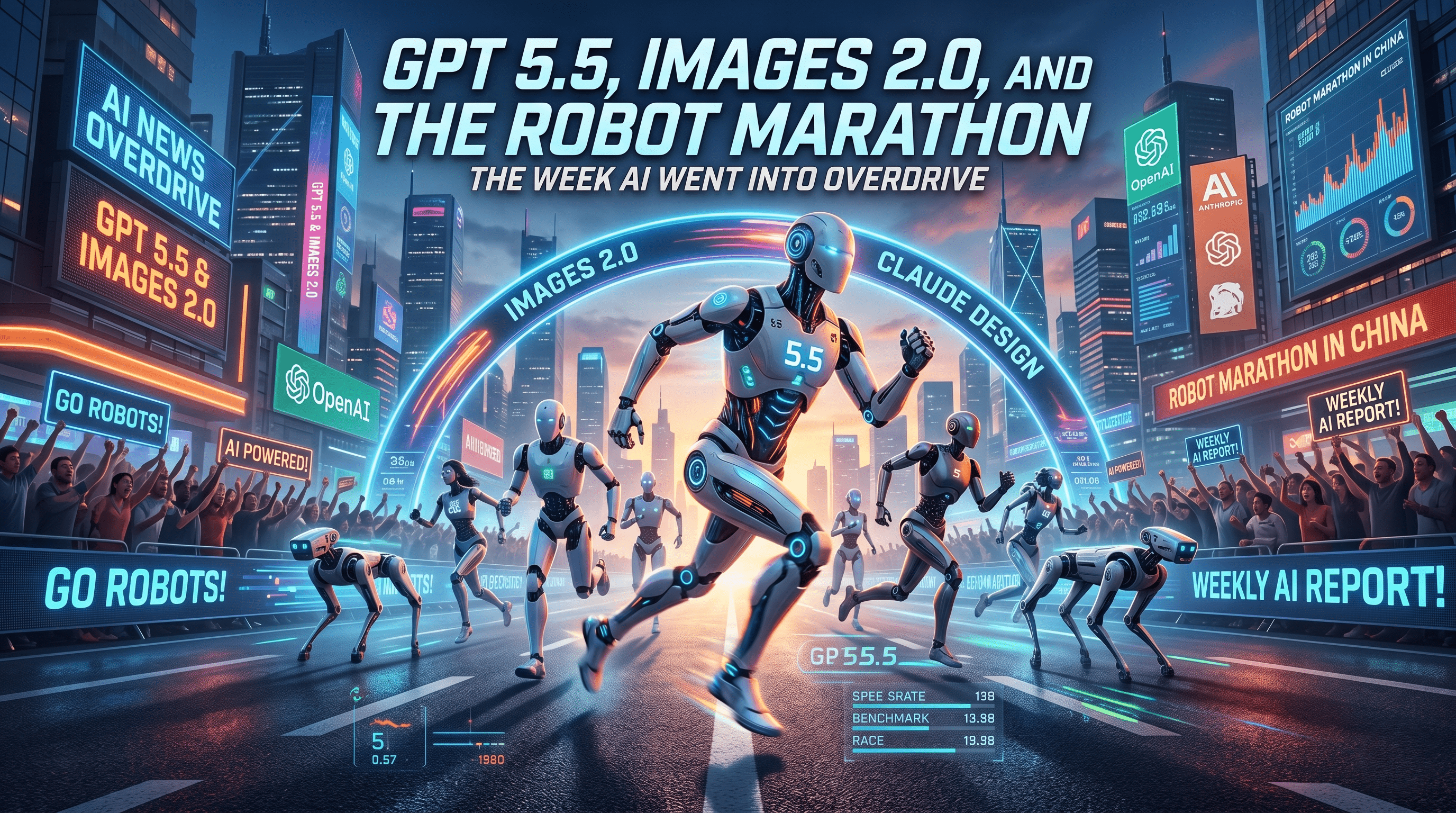
GPT 5.5, Images 2.0, and the Robot Marathon: The Week AI Went Into Overdrive
This has been an absolutely insane week in the world of artificial intelligence. We’ve seen a relentless barrage of updates from the industry's biggest titans, including OpenAI, Anthropic, and Google. If you feel like you’re drinking from a firehose, you aren’t alone. To help make sense of the chaos, I’ve broken down the most significant developments into this comprehensive report, covering everything from the launch of GPT 5.5 to a robot finishing a half-marathon faster than any human in history.
OpenAI’s Next Move: GPT 5.5 and the Pro Model
The headline of the week is undoubtedly the release of GPT 5.5, now accessible within ChatGPT and Codex. This isn't just a incremental bump; it represents a shift in how these models handle context and execution.
Efficiency vs. Pricing
The most notable technical change in GPT 5.5 is its ability to do more with less. It understands intent faster and can carry more of the operational work itself. In my testing, I found that you can provide significantly less detail and context, yet the model still manages to infer the desired outcome with high accuracy.
However, this intelligence comes at a premium. When looking at the API pricing, GPT 5.5 is double the cost of its predecessor, GPT 5.4.
| Model Version | Input Cost (per 1M tokens) | Output Cost (per 1M tokens) |
| GPT 5.4 | $2.50 | $15.00 |
| GPT 5.5 | $5.00 | $30.00 |
While the price has doubled, OpenAI argues that the model uses significantly fewer tokens to complete the same tasks, which may offset the cost for developers and enterprise users. Currently, GPT 5.5 is rolling out to Plus, Pro, Business, and Enterprise users, with the API expected to follow shortly.
Benchmarking Intelligence: GPT 5.5 vs. Mythos
One of the most anticipated comparisons was how GPT 5.5 would stack up against Anthropic’s "Mythos"—the model Anthropic famously deemed "too scary" to release. On the Terminal Bench (which measures a model's proficiency in running terminal commands), GPT 5.5 scored an 82.7%, narrowly beating Mythos’s 82%. This makes GPT 5.5 objectively one of the smartest models currently available for technical and agentic tasks.
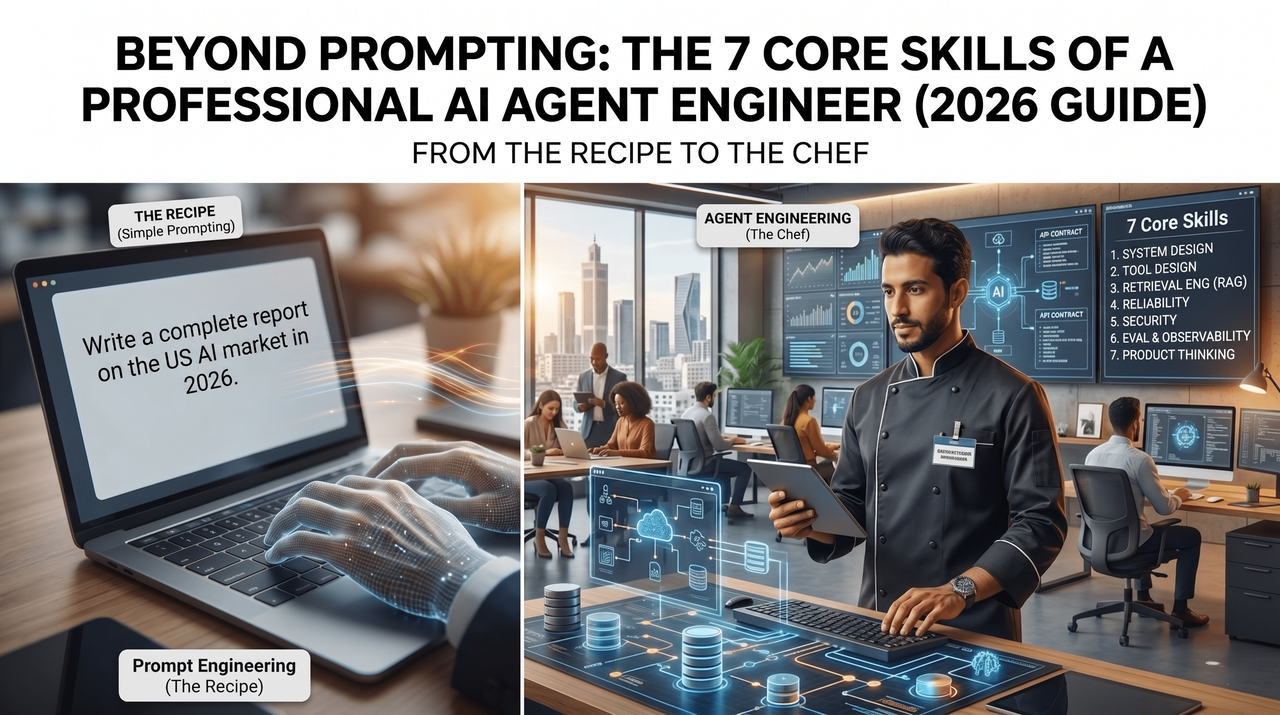
The Death of Prompt Engineering?
For the average user, the "vibe" of a model matters more than raw benchmarks. During my side-by-side tests between GPT 5.4 and 5.5, the difference in personalization was staggering.
When I gave both models a vague prompt like "Help me build a plan to be healthier," GPT 5.4 gave me a generic, one-size-fits-all response. In contrast, GPT 5.5 dug into my past chat history. It knew I lived in San Diego, it knew I recorded videos on Thursdays, and it even remembered my specific dietary habits (like skipping meals during the day and overeating at dinner). It built a plan that was ultra-tailored to my actual life.
This suggests we are moving toward an era where "prompt engineering" is less about crafting the perfect sentence and more about the model having enough historical context to "know" what you need before you even ask.
OpenAI Images 2.0: The End of "AI-Looking" Art?
OpenAI also unveiled ChatGPT Images 2.0, a massive leap forward in visual generation. This model now sits at the top of the LM Arena leaderboards, jumping from the 1200s to a score of 1500.
Standout Capabilities
- Dense Text Rendering: It can now handle newspapers, infographics, and posters with perfectly coherent, readable text.
- Thinking Capabilities: Images 2.0 can search the web for real-time information to inform its drawings.
- Functional Outputs: In a viral test by Riley Brown, the model generated a book cover with a barcode that actually scanned to the correct ISBN page on Amazon.
This level of world knowledge means you can ask for an anatomical drawing or a complex technical blueprint, and the model will use its "thinking" phase to ensure the details are scientifically accurate before rendering.
Anthropic’s Counter-Attack: Claude Design and Live Artifacts
Not to be outdone, Anthropic released Claude Design, a dedicated space for collaborating on visual work. It uses the Opus 4.7 vision model and is specifically geared toward prototypes, slide decks, and marketing collateral.
The Power of Animation
My favorite feature is its ability to generate After Effects-style animations. I used it to create a map of Las Vegas that zooms in and highlights specific convention centers. What used to take hours of manual labor in professional video editing software can now be prompted into existence in minutes.
Additionally, they introduced Live Artifacts in Co-work. This allows you to create live dashboards that connect to your files (like Google Drive or Figma). If your data updates, the dashboard updates automatically, turning Claude into a real-time command center for your projects.
The Crowded Model Landscape: Google, Alibaba, and Kimmy
While the US giants dominated the headlines, several other powerful models hit the market this week:
- Google DeepResearch Max: A state-of-the-art autonomous research agent that excels at deep-dive data synthesis.
- Qwen 3.6 Max (Alibaba): A proprietary model with improved agentic coding and world knowledge.
- Kimmy K2.6: An open-source model that surprisingly beat GPT 5.4 and Opus 4.6 in several key coding and reasoning benchmarks.
Rapid-Fire News & The Robot Marathon
To wrap up this report, here are the quick-hit updates you need to know:
- Privacy First: OpenAI released an open-weight Privacy Filter model designed to mask personally identifiable information (PII) locally on your machine.
- Clinical AI: ChatGPT for Clinicians is now free for verified medical professionals in the US to assist with documentation.
- The Mythos Leak: Despite being "unreleaseable," unauthorized users reportedly gained access to Anthropic’s Mythos model this week.
- The Robot Half-Marathon: In China, four robots finished a half-marathon in under an hour. One specific model ran at a pace that would leave the world's fastest human runners in the dust.
Final Thoughts
We are witnessing a fundamental shift from AI that answers questions to AI that executes tasks. Whether it’s GPT 5.5 navigating a terminal, Claude Design building your next presentation, or a robot literally running a marathon, the gap between digital intelligence and physical/operational capability is closing faster than ever.
Staying updated in this environment is a full-time job, but the goal remains the same: filtering the signal from the noise to understand how these tools can actually add value to our lives and workflows.
What a time to be alive.
If you're interested in learning more about the technical specifications of GPT 5.5 or the visual examples from Images 2.0, I recommend visiting the official OpenAI and Anthropic announcement blogs for the full data sets.

Comments
No comments yet. Be the first to share your thoughts!
Leave a Comment