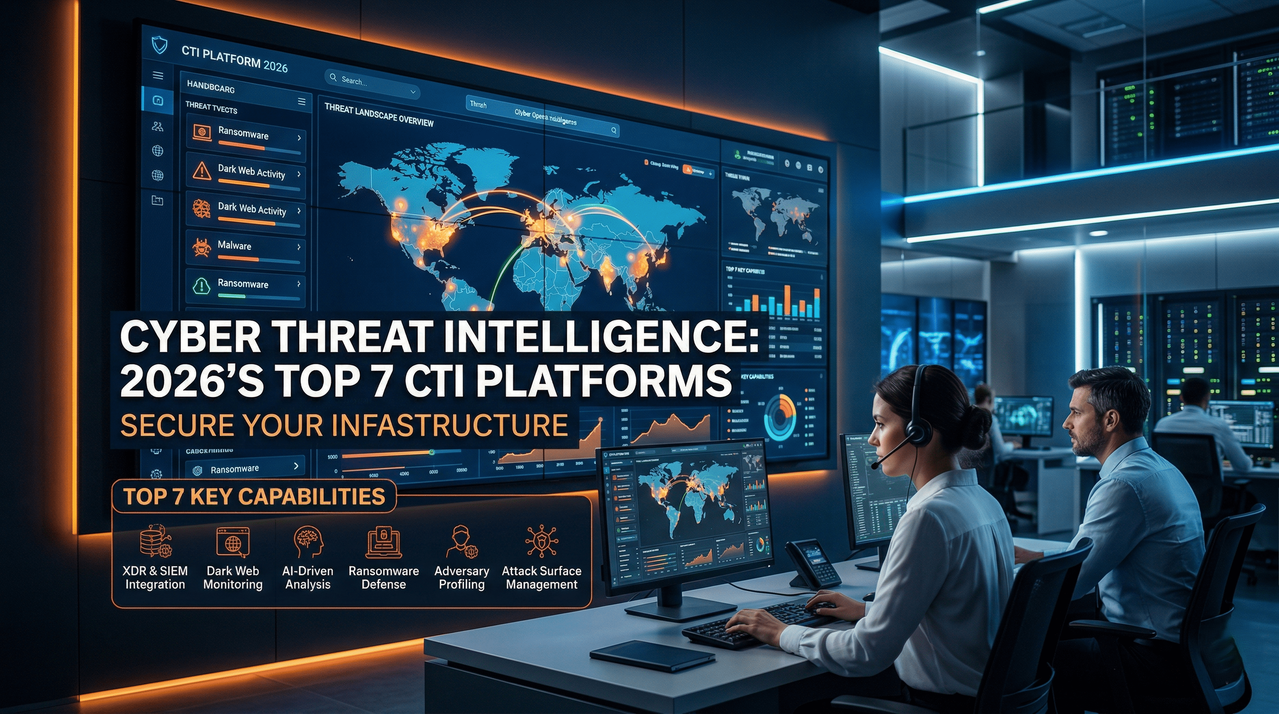
The Digital Bodyguard: Top 7 Cyber Threat Intelligence Platforms in 2026
I was sitting in my home office last Tuesday, nursing a lukewarm cup of coffee, when I realized that the internet has become a lot like a high-stakes poker game. Except in this game, the house doesn't always win, and the players are trying to steal your data instead of your chips. If you are an IT professional in the USA right now, you know exactly what I mean. The "bad guys" have gotten faster, and our old tools are starting to feel like bringing a knife to a laser-tag fight.
That is where a cyber threat intelligence platform comes in. You need more than just a firewall; you need a crystal ball that tells you who is coming for your servers before they even type the first line of code.
In 2026, the market is crowded. It is messy. But don't worry. I have done the digging for you. Here is my list of the top 7 platforms you should be looking at this year to keep your company out of the headlines for all the wrong reasons.
1. Recorded Future: The Heavy Hitter
If you want to know everything about everyone, Recorded Future is usually the first name on the list. I like to think of them as the "Google" of threats. They scan the open web, the dark web, and everything in between to give you a massive map of what is happening.
Why it's great: It uses Al-driven analysis to sort through billions of data points so you don't have to.
Best for: Large enterprises that need a threat intelligence platform with dark web monitoring.
2. CrowdStrike Falcon: The One-Stop Shop
You probably already know CrowdStrike for their antivirus, but their threat intelligence for XDR is where the real magic happens. It is built directly into their platform. If something weird happens on a laptop in Seattle, the whole network learns about it in seconds.
Why it's great: It is a cloud-native threat intelligence platform that doesn't slow down your machines.
Best for: Teams that want their CTI platform integrated with SIEM and EDR without the headache of extra setup.
3. Mandiant (by Google Cloud): The Detectives
When a huge company gets hacked, they call Mandiant. Because they are always on the front lines of incident response, their data is incredibly fresh. It is like having a private investigator who also happens to be a genius.
Why it's great: Unmatched expertise in threat intelligence platform for ransomware defense.
Best for: Organizations that care about "who" is attacking them, not just "how".
4. Palo Alto Networks Cortex XSOAR: The Automation King
In 2026, if you are doing everything by hand, you are losing. Cortex XSOAR is the best threat intelligence platform for SOC analysts who are tired of clicking the same buttons every day.
Why it's great: It turns intelligence into action automatically using "playbooks".
Best for: Highly mature enterprise threat intelligence platform needs where speed is everything.
5. SOCRadar: The Mid-Market Hero
Not everyone has a million-dollar budget. SOCRadar is arguably the best threat intelligence platform for small security teams because it packs a lot of power into a simple interface.
Why it's great: It focuses heavily on your "External Attack Surface"—meaning it tells you what your company looks like to a hacker.
Best for: Threat intelligence for small business and MSPs.
6. Intel 471: The Underground Specialist
Some platforms look at the "what," but Intel 471 looks at the "who." They spend their time lurking in the dark corners of the internet where the bad actors hang out.
Why it's great: Exceptional data for threat intelligence platform for financial services where fraud is a constant worry.
Best for: Companies that need deep adversary intelligence.
7. Anomali: The Big Picture
Anomali is the threat intelligence software you use when you have too much data and no way to organize it. It acts like a giant filing cabinet that makes sense of all your different feeds.
Why it's great: It supports STIX/TAXII and integrates with almost any existing SIEM or EDR you already have.
Best for: Large organizations that use multiple top CTI platforms and need to see them all in one place.
How These Platforms Compare in 2026
| Platform | Primary Strength | Best For | AI Capabilities |
| Recorded Future | Global Visibility | Enterprises | High (Real-time) |
| CrowdStrike | XDR Integration | IT/Security Teams | High (Automated) |
| Mandiant | IR Expertise | Incident Response | Medium (Human-led) |
| Palo Alto | Automation | SOC Efficiency | High (Playbooks) |
| SOCRadar | Attack Surface | SMBs/MSPs | Medium (Scoring) |
| Intel 471 | Dark Web | Finance/Fraud | Medium (Adversary) |
| Anomali | Data Management | Large SOCs |
How to Choose the Best Cyber Threat Intelligence Platform for Your Organization
I get asked this a lot: "Which one should I buy?". The answer is usually another question: "What are you trying to protect?".
1. Check Your Budget
If you are a giant bank, you need an enterprise threat intelligence platform like Recorded Future. If you are a local clinic, you might look at threat intelligence platform for healthcare sector tools that are more affordable and focused on patient data privacy.
2. Look at Your Team
Do you have twenty analysts or just one guy named Dave who also fixes the printer?. Small teams need automation. If you don't have time to "tune" a platform, go for something like SOCRadar or a managed threat intelligence provider.
3. Integration is Key
Can I integrate a threat intelligence platform with my existing SIEM or EDR?. If the answer is "no," don't buy it. In 2026, your tools need to talk to each other. You want a CTI platform integrated with SIEM and EDR so that a threat detected in your email automatically blocks the IP in your firewall.
Frequently Asked Questions
Are open-source threat intelligence platforms good enough for enterprises?
This is a classic debate. Tools like open source threat intelligence platform MISP, OpenCTI, or Yeti are amazing because they are free. But, and this is a big "but," they require a lot of work. You need to host them, update them, and vet the data yourself. Most enterprises use them alongside a commercial platform, not instead of one.
What is the difference between a threat intelligence platform and a TIP inside XDR?
Think of a standalone TIP as a library of every book ever written. A TIP inside an XDR (like Stellar Cyber or CrowdStrike) is like a textbook specifically for the class you are taking. Standalone platforms give you the big picture, while integrated TIPs are faster for stopping immediate attacks.
How important is AI and automation in modern threat intelligence platforms?
In 2026? It is everything. There is too much noise for humans to handle. Threat intelligence platform with Al-driven analysis can score threats, telling you which ones are "boring" and which ones are "call the CEO" dangerous. Automated playbooks ensure that your response happens in milliseconds, not hours.
Do these platforms support dark web and external-attack-surface monitoring?
Yes, most of the best cyber threat intelligence tools now include this. They look for your leaked passwords, stolen credit cards, or even mentions of your company name on hacker forums. It is about seeing what the hackers see.
Wrapping Up: Making the Right Move
Choosing a threat intelligence platform 2026 doesn't have to be a nightmare. Whether you are looking for the best threat intelligence platform for small security teams or a massive enterprise solution, the goal is the same: stay one step ahead.
I suggest starting with a trial. See how the data feels. Does it make your life easier, or is it just more noise?. The best tool is the one your team actually uses every day.
Ready to level up your security? I would love to hear what you are using. Are you a fan of the open-source route, or do you prefer the "set it and forget it" style of the big vendors?.

Comments
No comments yet. Be the first to share your thoughts!
Leave a Comment